The platform
An operating system, not a scoreboard.
Seven stages, run continuously. Each answers a question a merchant actually asks, and hands the next stage something to work with.
Prompt “Best black dress shirts for men under $150?”
Three come up again and again: Charles Tyrwhitt1 for the non-iron finish, Brooks Brothers2 for the classic cut, and UNTUCKit3 if you want a shorter length.
Your product: not mentioned in 8 of 10 questions in this category.
Prompt “What dress shirt works for a long day at a wedding?”
For all-day wear the answers lean on Charles Tyrwhitt1 and Ledbury2, both cited from wedding-attire guides.
Your product: mentioned once, in position 5, without the fabric detail buyers ask for.
Prompt “Best black dress shirts for men under $150?”
Most answers now name your product1 for the 120s two-ply cotton and the all-day wear data, alongside Charles Tyrwhitt2.
Verified lift: named first in 6 of 10 questions, day 28, against untouched comparison products.
Illustrative example. Competitor names are real brands in this category; the answers shown are a worked example, not a live query.
Stage 1
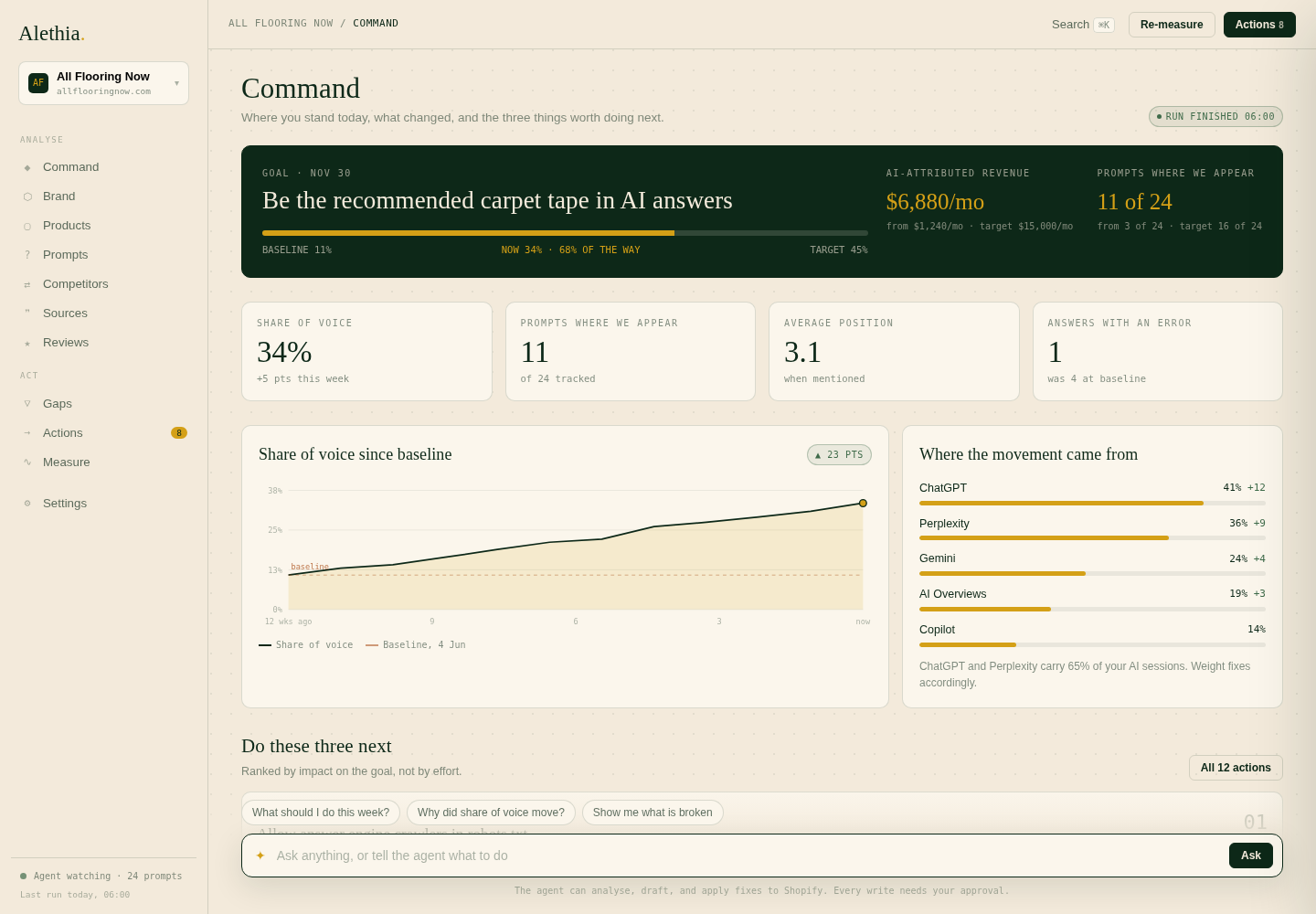
Where you are
Current visibility across brand and products. Which questions you appear in, which you do not, which products are invisible, and which competitors are taking the answer.
- Visibility, share of voice, average position, sentiment
- Question-by-question appearance map
- Competitor set matched to your size and category
Stage 2
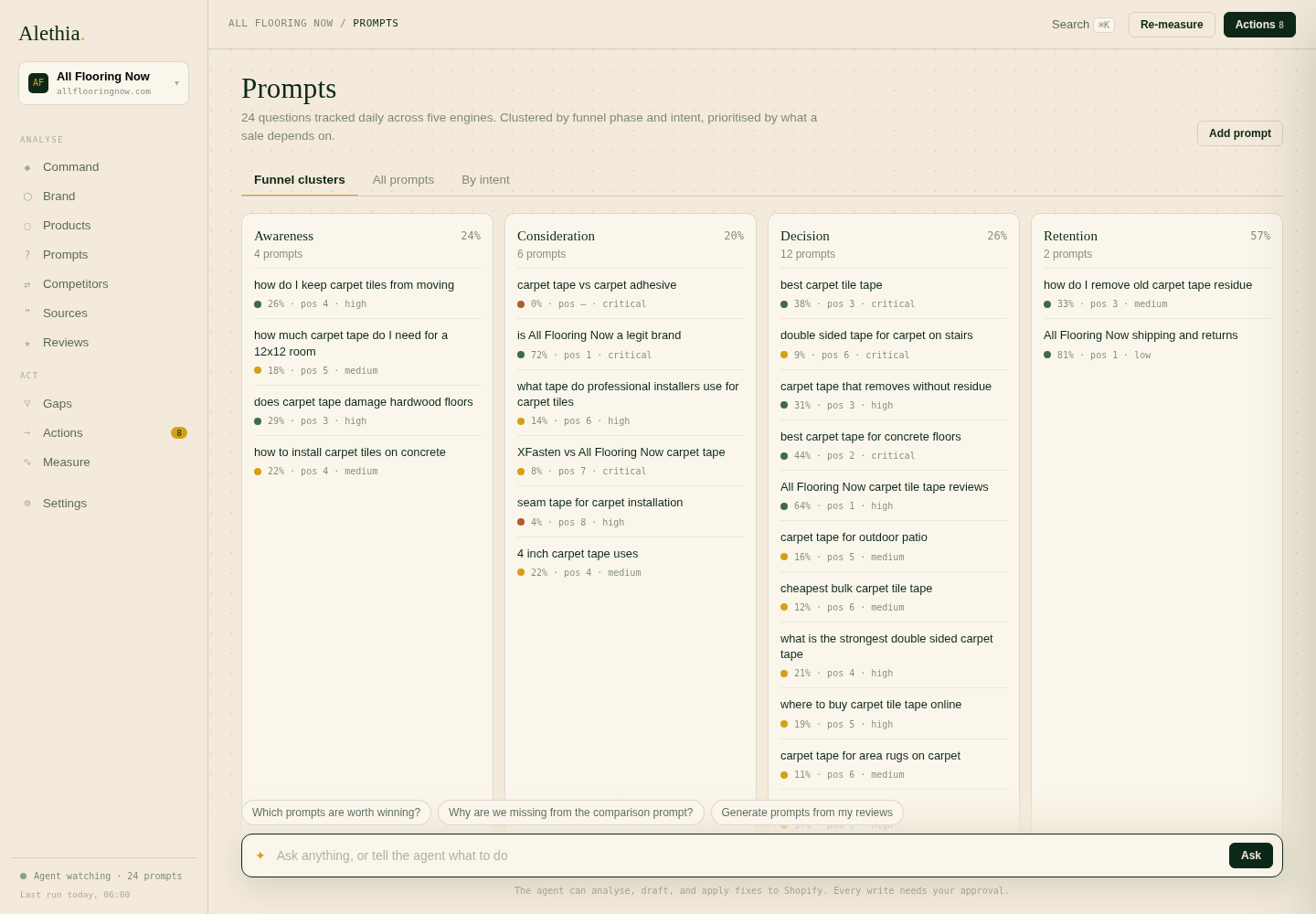
What the potential is
The traffic and revenue opportunity if the gaps close, at question, category and product level, with a competitor ceiling to benchmark against.
Stage 3
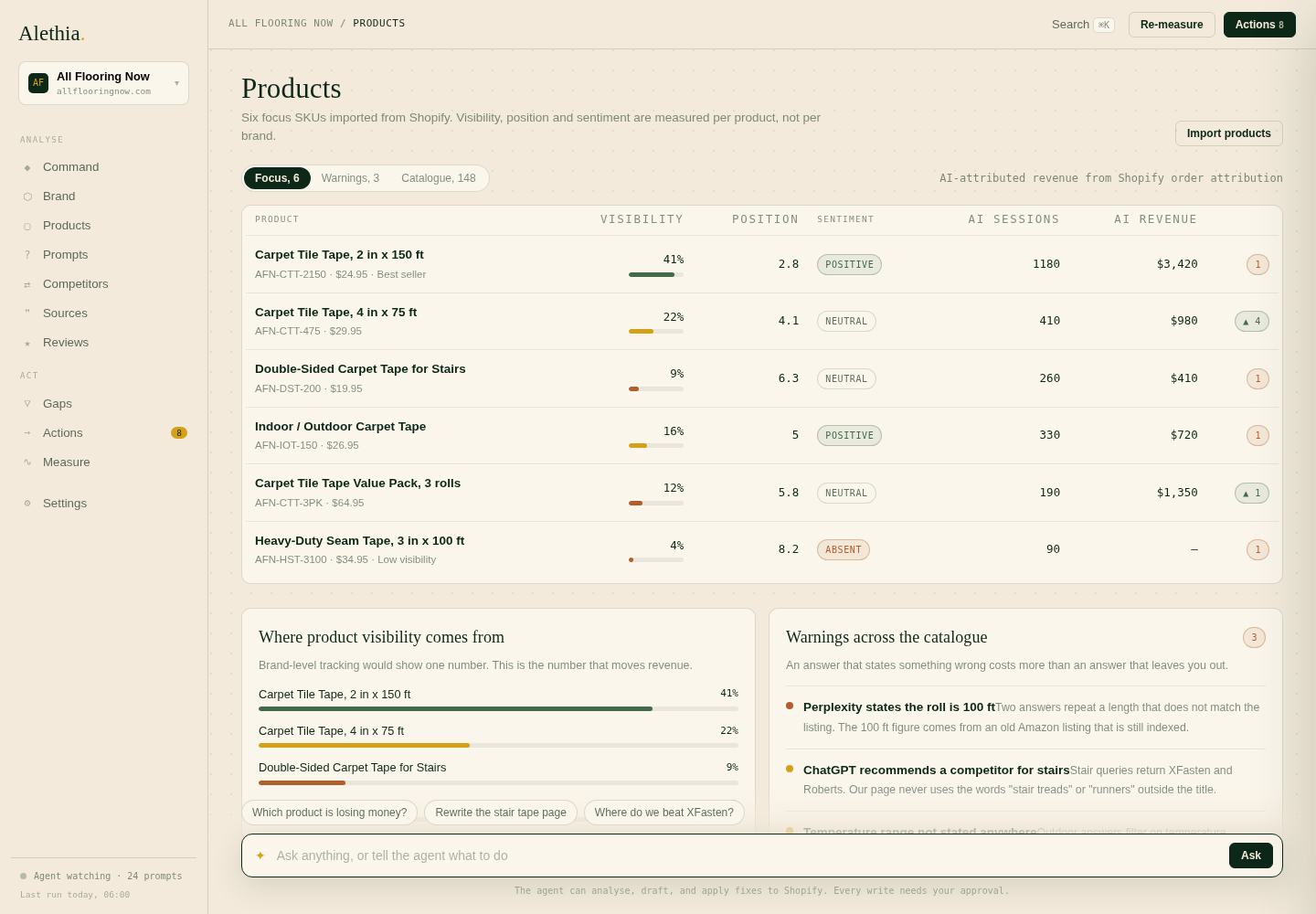
What to do, in order
A prioritised action list that reads like a to-do list, not a report. Every action ranked by expected impact on the revenue behind it.
- ##INLINE3##Fix this product page
- ##INLINE4##Add this missing attribute
- ##INLINE5##Get cited by this source
- ##INLINE6##Publish this comparison page
Stage 4
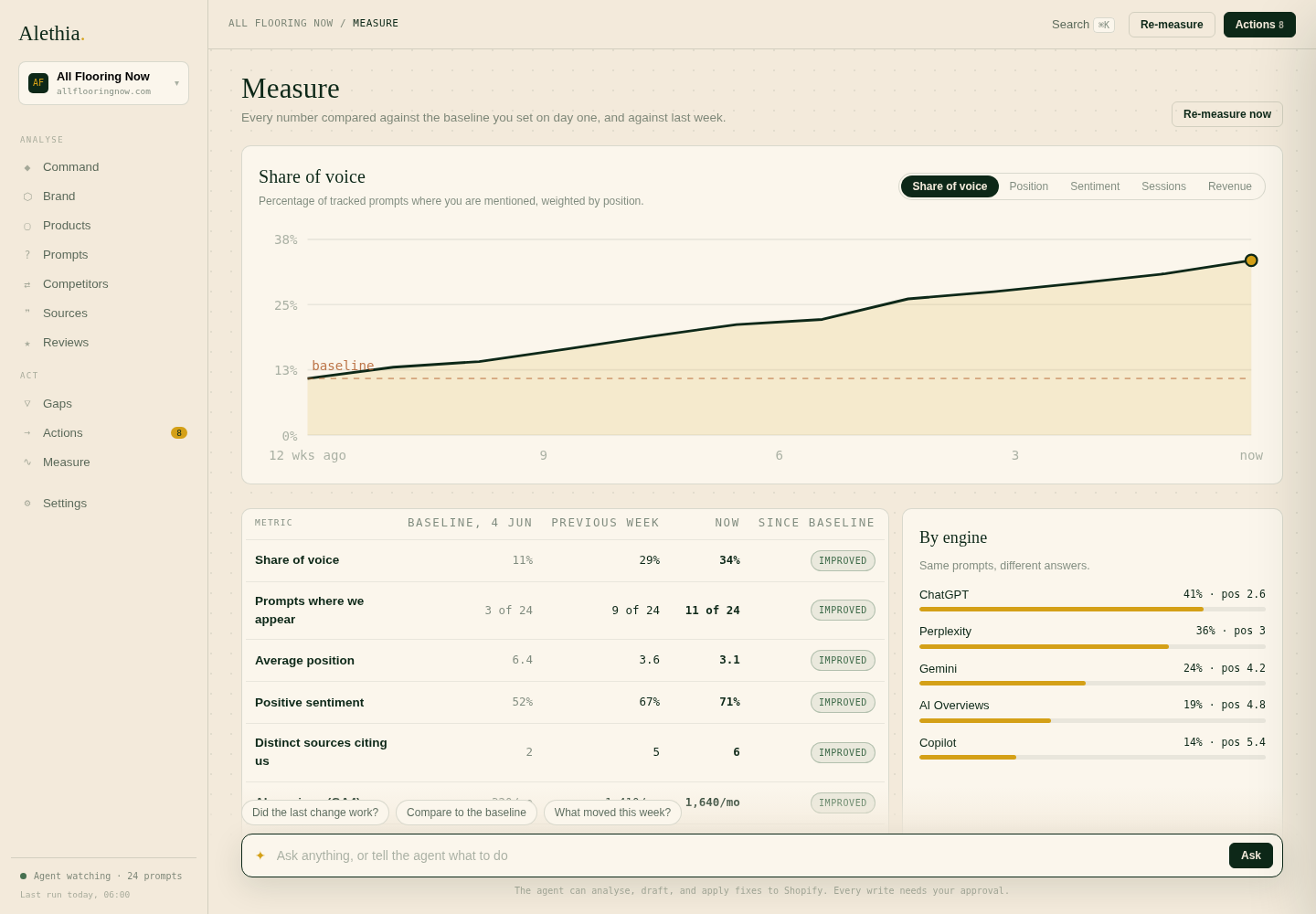
What impact it will have
Expected lift, coverage improvement and traffic change, with a confidence level, before the work starts.
Stage 5
Tools to do it
Product description optimiser, PDP content generator, schema generator, comparison and FAQ briefs, metafield suggestions, one-click Shopify publishing where possible.
Our classic black shirt. Great for any occasion. Slim fit.
##INLINE8####INLINE12## Non-iron finish, slim and classic fits, 14–18½ collar. Tested for twelve-hour wear.
Stage 6
Agents that act
Outreach, publishing, technical, monitoring, competitor intelligence, source discovery, change tracking and weekly re-run. Nothing publishes without approval.
Stage 7
Continuous brand learning
Which actions moved visibility, which formats earned citations, which sources matter in your category, and what language the engines use when they recommend you.
Brand and product, side by side
Brand level gives you a headline. Product level tells you what to fix on Monday.
Corporate gift ideas for employees and anniversary gift for my wife are two different questions needing two different pages. Brand-level tracking cannot see that difference.
Every major engine
ChatGPT, Perplexity, Gemini, Claude and AI Overviews, re-run on the same schedule so comparisons hold.
Per product, per question
Ten or more questions for an important product, fewer for the tail, all rolled up to category and brand.
Full picture
Every page the engine drew on, classified by whether you can edit it, pitch it, or only listen to it.
Who took your answer
The brands winning your questions, what they show that you do not, and where they are cited that you are not.
No commitment
See how AI is selling your products.
Get your free Alethia AI report and see where your brand stands across the AI platforms your customers are already using.


